I am 29 as of this writing, and have been taking lessons in piano for almost 2 years now. And, it’s been fantastic. It’s also been challenging, adds pressure in my life, made me realize limitations that I could comfortably hide during years of dabbling by myself on my keyboard, opened up entire worlds I barely knew the existence of.
Most people start learning piano at, say, seven. So, while I have been messing around on keyboards on and off since I was 15, I am still extremely late to be starting serious, classical piano lesson at my age.
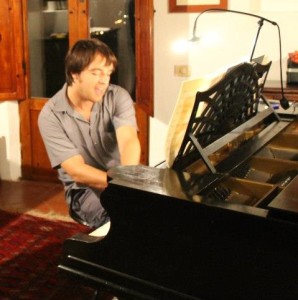
But I stopped being jealous of those 7-year olds, and decided to finally start learning myself. And, even though my progress has been a lot slower than I had initially expected, it’s been a really great experience so far! Below are some reasons that I believe make learning to play the piano worthwhile whether your’re 7 or 77.
1. the fun is in the learning, not in reaching any actual resulting skill level
This is explained at length in the great book The Practicing Mind: as adults, we are often driven by goals, and every step taken to reach them comes with a degree of frustration because you are not quite there yet.
Sometimes this holds you back rather than help you advance: daunted by the difference between where you are now and where you hope to be, you feel so intimidated that you give up entirely.
In many situations both personal and professional, setting and reaching concrete goals is a good way to reach results. But when learning something in your personal time for fun and personal satisfaction, it pays off to just enjoy the process of learning as you do it. Get in the zone. Play.
With piano, you can stop caring about improving, but instead just enjoy what you are doing and know that, however slowly or quickly, as long as you are always working on new things, you are.
2. You discover music that you never knew existed
Sure, you love the idea of playing Beethoven’s Moonlight Sonata, Mozart’s Turkish March, or even Adele’s Someone Like You. And it is great. (not that I can play anything besides Adele from that list – working on it though!)
But another, rather unexpected, joy that I have found in learning the piano is discovering great music.
Even without any formal musical education or preference for classical music, the melodies of piano songs like those mentioned above are known to most. But I never knew that guys like Grieg and Tsaikovsky wrote these wonderfully intimate things for piano well, that alter your mood as much while playing, as they do while listening them. Or an even better examples: Russian composers Mussorgsky or Sviridov, both of whom I’d never heard of before having to learn a beautiful piece they wrote, like this one!
3. You get to peak in Bach’s mind
There is nothing quite like staring and trying for hours at a Bach piece, when suddenly it ‘hits’ you what the guy is doing, and how brilliantly there’s not just a beauty, but often also a pattern to his pieces.
It must have been since I learned Galois theory in second year of uni that I felt that excited.
4. It’s great for flexing brain muscles
Which is something that no doubt you do already often during your work or studies, but still. Can’t flex em enough!
5. It sounds beautiful early on and when played alone
Unlike by themselves wonderful instruments like the violin or trumpet, by the time you practice your 4th piece, you’re doing something that pleases the ear. This is a great motivator for yourself to keep on going, and increases your chances of your flatmates not kicking you out.
6. Every piece you learn is an accomplishment to be proud of
Because you are adding some beauty to the world, your friends who volunteered to listen, the room you’re in. That’s not something to take lightly. What’s more, YOU did it. YOU took the initiative, and so you got yourself to thank for every note you hit right.
7. It tends to impress the other gender
Oddly – and rather unfairly – enough, playing a piece on the piano seems to impress the ladies more than, say, explaining the elegance of group theory. Believe me, I’ve A/B tested.
On the other side of the coin, and I know it’s only one data point, but still: a girl that plays the piano instantly makes my heart beat a bit faster.
Conclusion
If you ever dreamt of taking lessons in piano, like I did for years before taking the plunge, I say go do it.
One last question: learning by yourself versus going to a music school versus taking a private teacher?
If you can afford it, I think your piano playing will be a lot more satisfying and likely to be a successful endeavor if you opt for a private teacher.
That’s because it gives you the freedom to steer the lessons according to your individual tastes. I tried to learn on my own for years, and I never had the character to go for the really hard bits. Like songs that use the black keys. But my teacher (who is wonderful) pushes me to also explore these, sit down and expand my comfort level, and generally giving both constructive and encouraging feedback. And to me that makes all the difference.