What it is
An enterprise-style, flexible CRM built on Laravel—a real, running product, not
a mockup. It's an open, self-hostable alternative to the classic enterprise CRMs (Salesforce,
Dynamics 365, SAP Sales Cloud) that covers the core sales-and-service workflow without the
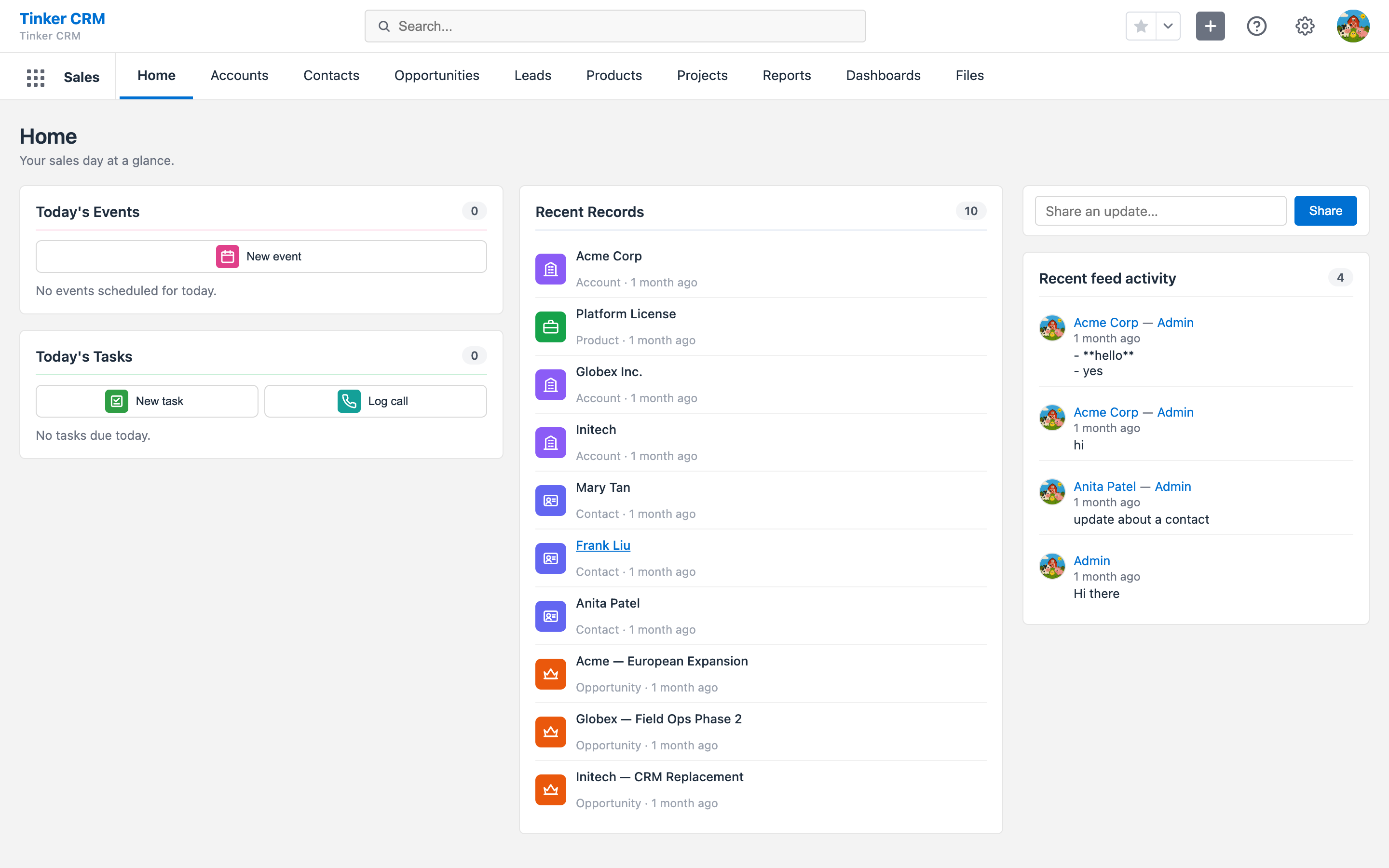
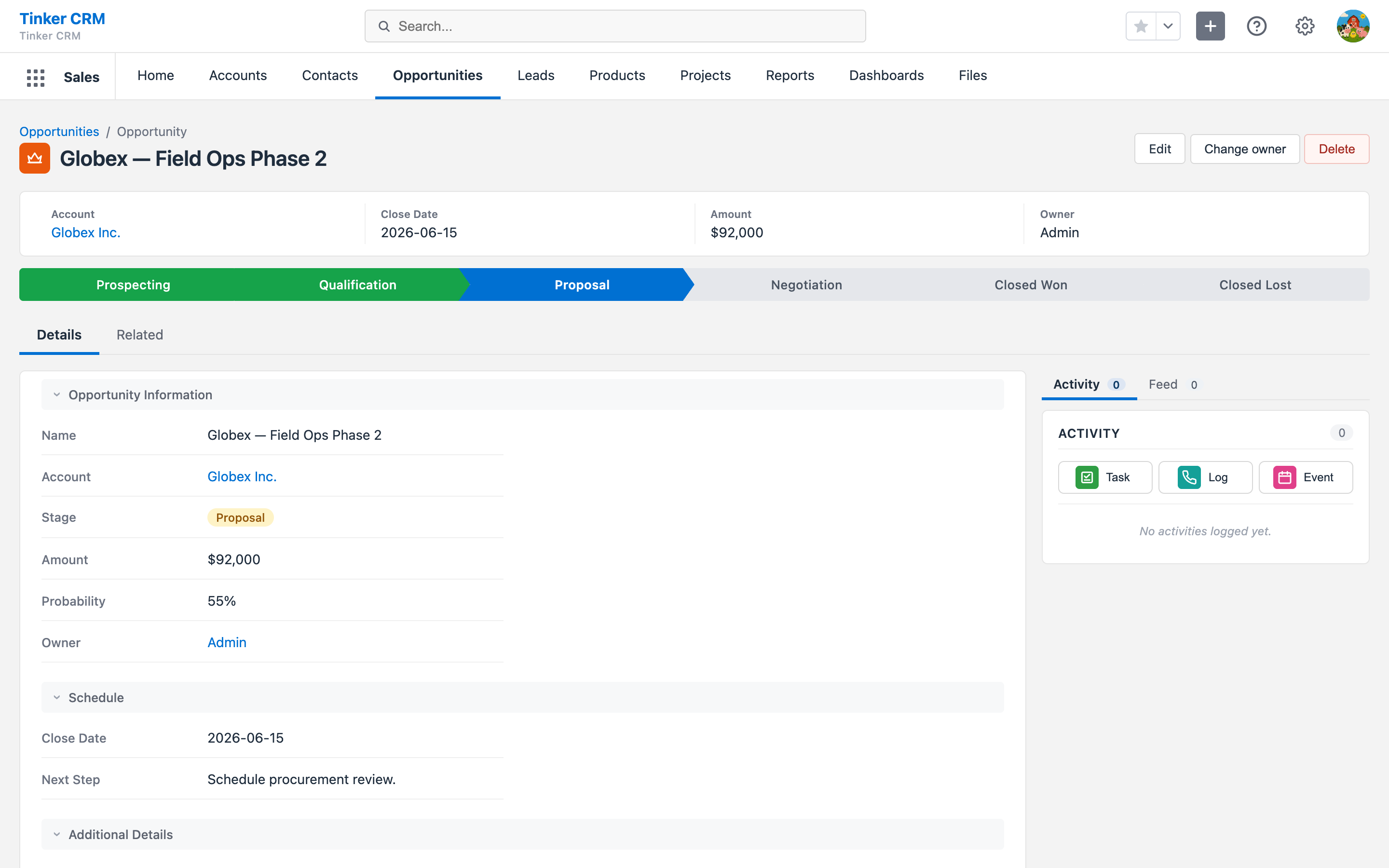
per-seat pricing or vendor lock-in. Accounts, Contacts, Leads, Opportunities with stage-based
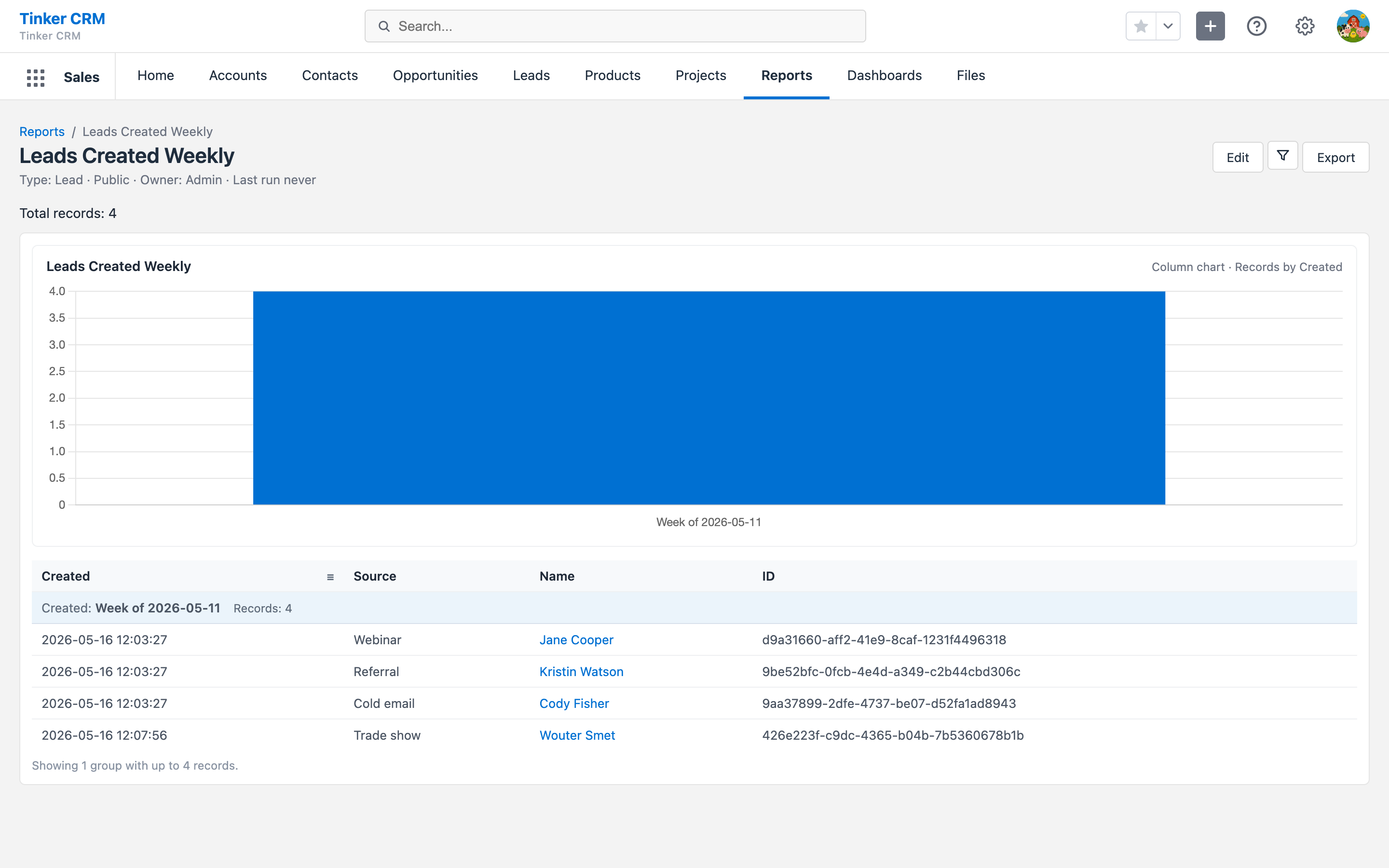
pipelines, Activities, Cases, list views, reports, dashboards, roles and sharing rules, plus a
full REST API—all where an enterprise CRM admin would expect them.
The guiding idea: keep the shape that makes those platforms productive—the
metadata-driven data model, the configurability, the familiar admin concepts—while putting it on
a stack a single person can own, read end to end, and evolve continuously through conversational
AI tooling rather than a vendor's release cycle.
Familiar by design
"Familiarity" isn't nostalgia—it's the lever that keeps switching costs low. If you've
administered Salesforce, the mental model maps over almost immediately: standard and
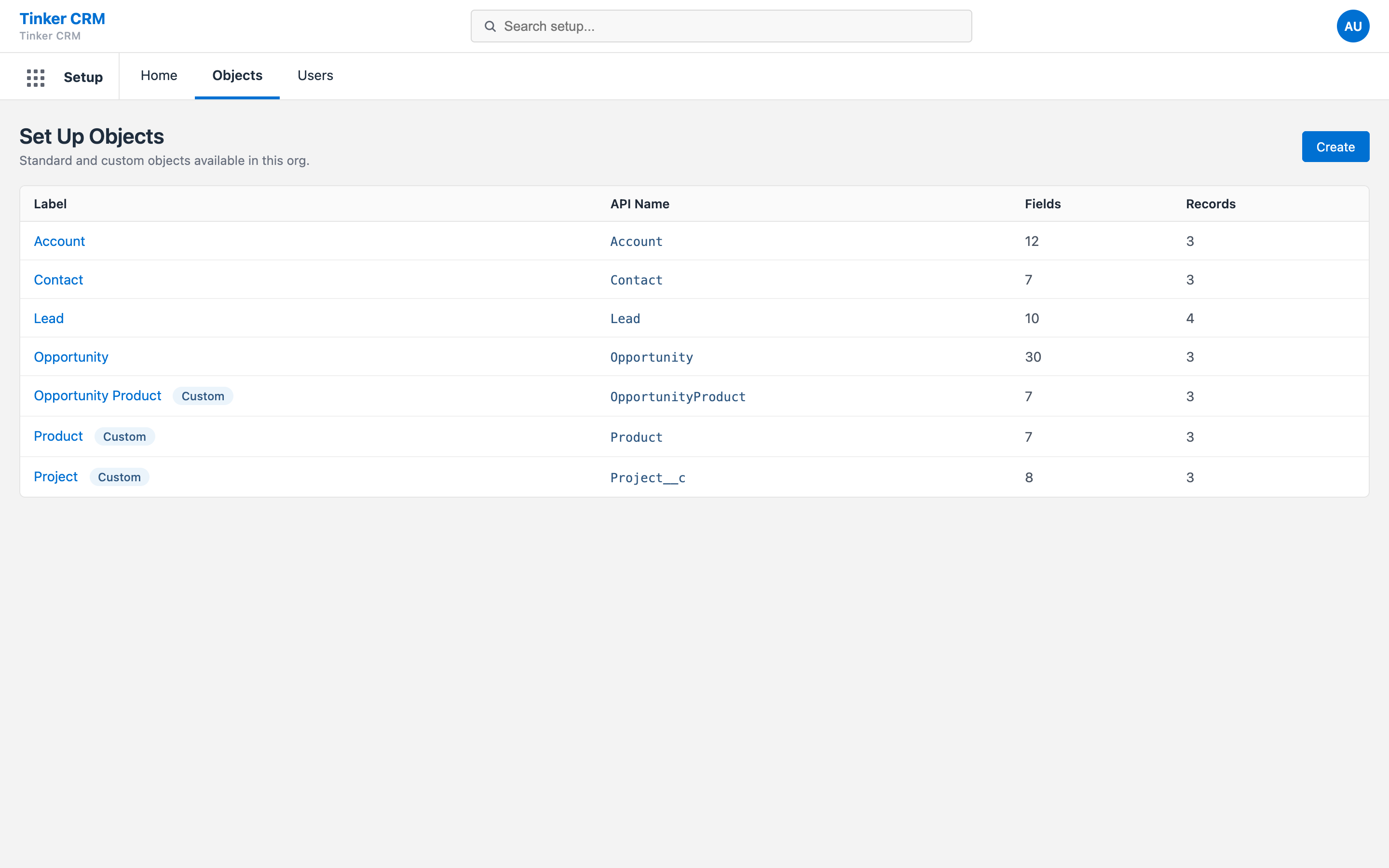
custom objects (with __c API names), field-level metadata with data types, picklists
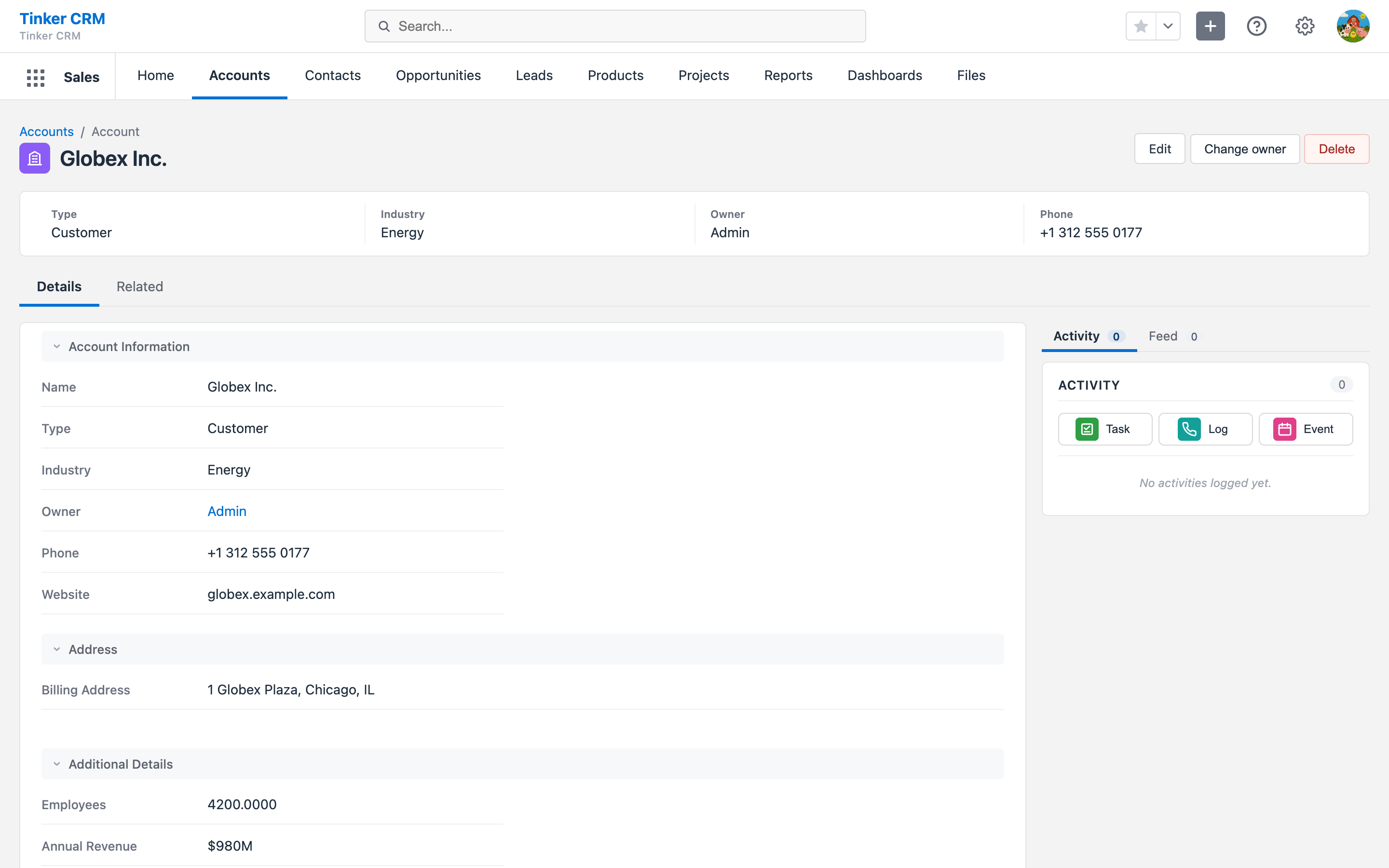
and lookups, page layouts, record detail pages with related lists and an activity timeline,
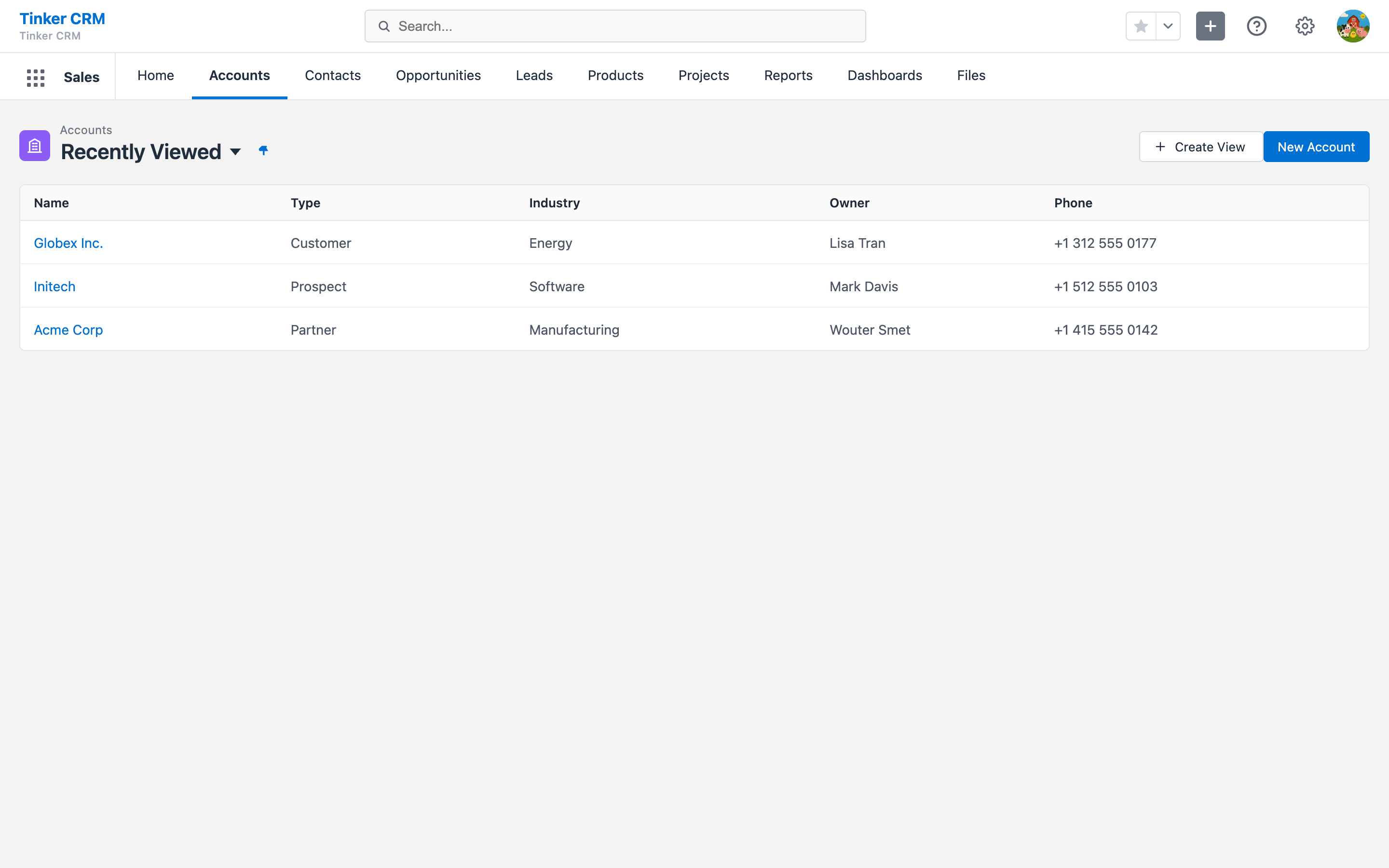
stage-path opportunity pipelines, "Recently Viewed" list views, and a Setup area with an Object
Manager. A custom object behaves like a custom object; a stage-based opportunity works like you'd
expect.
It even ships with a Salesforce Importer—authorize a Salesforce org over OAuth
and pull objects, users, and data across—so migrating off an incumbent doesn't mean relearning how
to think about your data.
The personal angle
I've spent a lot of hands-on time working in, administering, and integrating with
Salesforce, MS Dynamics, and SAP Sales Cloud. Tinker CRM is partly an exercise in distilling what
actually makes those platforms feel good to administer—and what's just incidental complexity—then
rebuilding the good parts on a stack that's a joy to vibe-code against. It's server-rendered Blade
with hand-written CSS and vanilla JS—no build step—so the whole thing stays legible and freely
evolvable.